As I have done in the past, it's time to move on from this blog in favor of the next chapter. If you want to know what I'm up to in grad school, if you're interested in learning, bit by bit, what I did over the summer, then join me here. "Here" being, of course, my oft-referenced but never linked Academic Blog from college, which exists under--gasp!--my actual name. I'll be refurbishing it over the next few months. That is, it won't be All Spies All the Time, although I'm thinking there is still considerable room for those guys in my new life. Donald Maclean in particular may, at long last, get the literary representation he deserves.
So thank you! Having this as an outlet during my time in Chicago kept me writing, and saw me through a difficult time to a transformative one. Who knows what's next?
I'll see you there!
Wednesday, August 20, 2014

Thursday, May 22, 2014
My Kind of Town
Puffy winter coats with fur-lined hoods. Bright yellow sweatshirt/peacoat hybrid. Chucks. Brunches at Owen & Engine and escapes to DeKalb. Fall
walks downtown. Reading benches: River East, Lincoln Park, and Oz Park. 22, 36, 151, 8, Brown, Pink. Movies at
the AMC, at the Music Box, at the Landmark. Rats. Ann Sather's cinnamon rolls. The Heart is a Lonely Hunter at Steppenwolf and a monologue for the ages.
That feeling of knowing people are watching out for you. Walking slowly;
learning swag. Getting called Princeton again. 11/11/11 at the cupcake place. Injustice; losing a friend. Robyn, Kanye, "Good Feeling," "Whip My Hair," "Feel It In My Bones," "Dust Bowl III," "Help I'm Alive," "Break On Through (To The Other Side)." Fear. Christmas lights softening a room.
Snow on the trees outside. ZooLights and Christkindlmarket and chocolate-covered peppermint Joe-Joes.
The lowest point; breaking down in hysterics on Lake Shore Drive and pulling
off to take surface roads, still crying. The restorative joys of Cloud
Atlas, and the staggering power of the
Letter Game, immediately following it. Walks by the North Pond; heron spotting; loon searching. Friday pizza
nights, Person of Interest, Arrested Development, and Elementary. Rediscovering springtime. Getting beaten down by winter, a
once-favorite season. Sunburn at the Pride Parade and dancing at Ravinia. Car trouble. Internet trouble. Decision-making and
follow-through. Friends who refuse to see you as anything less than who you are. Finding points of connection to a girl who is even shyer than you were. Baking powder as an air freshener. The universal in the specific and the momentous in the ordinary. Scandal and literal water coolers. Floriole and La Fournette and portable traditions. "Imma need for you to get it together." The architecture boat tour. The beer baron's house. Gino's East. Hanging way too many floors above nothing at the "Willis" Tower Skydeck. The Ferris Wheel. Getting creeped out by the H. H. Holmes Wikipedia entry on Halloween. Walking around on Halloween smelling the air and admiring costumes and eating M&Ms from a jacket pocket. Accidentally getting stuck in Cubs foot traffic. Dining a block from the Obamas. The Tribune Tower and stones from all over the world; a coolness test for guests. Growing up. Empathy. Self-analysis. Specialty drinks. Tacos. Deming, Geneva, Cermak, Washtenaw, 19th, Ogden, Roosevelt, Pine Grove, Lake Shore, Arlington, Orchard, Webster, Burling, Stockton, Larabee, Fullerton, Halsted, Clark, Lincoln, Sheffield, North, Damen, Michigan, Illinois, McClurg. Life-changing at the Duke of Perth and the Violet Hour. Mon Ami Gabi. The Purple Pig. The Burwood Tap. The Hopleaf. Tall, tall tales and professional lies. Other people's beloved plus ones. Dancing all night at business students' weddings. Green river. People watching in The Palmer House. Arguing with a taxi driver who won't go to 78th and Cottage Grove; "There's a Starbucks there. Relax." "I love running errands with a white person." "You're tougher than you look. We thought you'd be long gone by now."
Tuesday, May 13, 2014
“Only love could pick a nested pair of steel Bramah locks.”
Better late than never!
Beginning in April 2007, I started keeping a list of all the books I'd read the previous year. 2013-2014 was a good year for reading, continuing and refining my new trend of quality over quantity. (We'll see how this trend stands up against grad school for the next three years.)
Books
1) A Dance for Emilia, Peter S. Beagle
2) The History of Love, Nicole Kraus
3) Christopher and His Kind, Christopher Isherwood
4) Friendship of Convenience, Rufus Gunn
5) Aspects of the Novel, E.M. Forster
6) Kathleen and Frank, Christopher Isherwood
7) Dido and Pa, Joan Aiken*
8) Memoirs of Hadrian, Marguerite Yourcenar
9) A Boy's Own Story, Edmund White
10) Good Kings Bad Kings, Susan Nussbaum
11) City Boy, Edmund White
12) In the Woods, Tana French
13) All the Pretty Horses, Cormac McCarthy
14) The Amazing Adventures of Kavalier & Clay, Michael Chabon
15) The Reason I Jump, Naoki Higashida
16) The Swimming-Pool Library, Alan Hollinghurst
17) The Arrival, Shaun Tan
18) Breakfast at Tiffany's, Truman Capote
19) Hymn and Cocktail Sticks, Alan Bennett
20) Pawn in Frankincense, Dorothy Dunnett*
21) The Days of Anna Madrigal, Armistead Maupin
22) The Light Between Oceans, M.L. Steadman
23) The Ringed Castle, Dorothy Dunnett*
24) The Devil in the White City, Erik Larson
25) The Raven Boys, Maggie Stiefvater
26) The Dream Thieves, Maggie Stiefvater
*re-reads
Top Five of the Year, in descending order
The Amazing Adventures of Kavalier & Clay, Michael Chabon
The Days of Anna Madrigal, Armistead Maupin
The Dream Thieves, Maggie Stiefvater
Christopher and His Kind, Christopher Isherwood
Kathleen and Frank, Christopher Isherwood
The Amazing Adventures of Kavalier & Clay was this year's best because, finishing it, I could imagine myself great. I could see greatness in others. I could imagine ordinary people leaping tall buildings with a single bound. I've enjoyed a lot of books, but the ones that stay with me are the ones where I discover little pieces of myself.
I wrote a little about Christopher Isherwood in my personal statement. Here is an excerpt. It was a really good year.
Past years
2012-2013
2011-2012
2010-2011
2009-2010
2008-2009
2007-2008
Beginning in April 2007, I started keeping a list of all the books I'd read the previous year. 2013-2014 was a good year for reading, continuing and refining my new trend of quality over quantity. (We'll see how this trend stands up against grad school for the next three years.)
Books
1) A Dance for Emilia, Peter S. Beagle
2) The History of Love, Nicole Kraus
3) Christopher and His Kind, Christopher Isherwood
4) Friendship of Convenience, Rufus Gunn
5) Aspects of the Novel, E.M. Forster
6) Kathleen and Frank, Christopher Isherwood
7) Dido and Pa, Joan Aiken*
8) Memoirs of Hadrian, Marguerite Yourcenar
9) A Boy's Own Story, Edmund White
10) Good Kings Bad Kings, Susan Nussbaum
11) City Boy, Edmund White
12) In the Woods, Tana French
13) All the Pretty Horses, Cormac McCarthy
14) The Amazing Adventures of Kavalier & Clay, Michael Chabon
15) The Reason I Jump, Naoki Higashida
16) The Swimming-Pool Library, Alan Hollinghurst
17) The Arrival, Shaun Tan
18) Breakfast at Tiffany's, Truman Capote
19) Hymn and Cocktail Sticks, Alan Bennett
20) Pawn in Frankincense, Dorothy Dunnett*
21) The Days of Anna Madrigal, Armistead Maupin
22) The Light Between Oceans, M.L. Steadman
23) The Ringed Castle, Dorothy Dunnett*
24) The Devil in the White City, Erik Larson
25) The Raven Boys, Maggie Stiefvater
26) The Dream Thieves, Maggie Stiefvater
*re-reads
Top Five of the Year, in descending order
The Amazing Adventures of Kavalier & Clay, Michael Chabon
The Days of Anna Madrigal, Armistead Maupin
The Dream Thieves, Maggie Stiefvater
Christopher and His Kind, Christopher Isherwood
Kathleen and Frank, Christopher Isherwood
The Amazing Adventures of Kavalier & Clay was this year's best because, finishing it, I could imagine myself great. I could see greatness in others. I could imagine ordinary people leaping tall buildings with a single bound. I've enjoyed a lot of books, but the ones that stay with me are the ones where I discover little pieces of myself.
I wrote a little about Christopher Isherwood in my personal statement. Here is an excerpt. It was a really good year.
Early this year, partially in an effort to understand where I might be heading with my own writing, I immersed myself in the writings of Christopher Isherwood. Having already read Berlin Stories and A Single Man in college, I went on to read Lions and Shadows, Down There on a Visit, Christopher and His Kind, and Kathleen and Frank.Lions and Shadows is the book I wish I could hand anyone attempting to write about people in their twenties. It's great to read about Isherwood, pre-Berlin, trying to find himself as a writer in places of little or no inspiration; struggling to reconcile his calling as an artist with the pressure to come up with a solid career; consoling himself with this friends while simultaneously comparing himself to them and always coming up short; feeling most confident at the beginnings of things, before they've had a chance to become complicated. This is the way to talk about your twenties: at a distance, with fondness, and with hope.Isherwood is famous for his depiction of a European turning point, and is also well known for the candor with which he revisits his stories. Down There on a Visit revisits ground covered in Berlin Stories. Christopher and His Kind revisits both those works while peeling back the light veneer of fiction covering both of them. In Kathleen and Frank, Isherwood does something completely different. He steps, for the most part, out of the spotlight. He dispenses with fictionalization altogether. He attempts to tell the story of his parents in their own words, through letters and diary entries.These are not the parents he described in his own writing. These people are multifaceted, deep thinking, and kind, and may have understood him a great deal more than he realized. In Kathleen and Frank, Isherwood comes closest to walking in another’s shoes. The place he describes in Kathleen and Frank is not somewhere you could visit; it is his childhood, through the eyes of others.
Past years
2012-2013
2011-2012
2010-2011
2009-2010
2008-2009
2007-2008
Sunday, March 30, 2014
More than a mile
When it comes to the joy and necessity of walking a mile in someone's shoes, To Kill a Mockingbird does a pretty good job of explaining:
“You never really understand a person until you consider things from his point of view--until you climb inside of his skin and walk around in it.”Nonetheless, I personally prefer this quote from Joan Aiken's Is Underground:
“She thought about Penny teaching her to read. 'What’s the point of reading?' Is had grumbled at first. 'You can allus tell me stories, that’s better than reading.' 'I’ll not always be here,' Penny had said shortly. 'Besides, once you can read, you can learn somebody else. Folk should teach each other what they know.' 'Why?' 'If you don’t learn anything, you don’t grow. And someone’s gotta learn you.'There are worse reasons to do what I'm doing.
Well, thought Is, if I get outta here, I’ll be able to learn some other person the best way to get free from a rolled-up rug.”
Wednesday, March 19, 2014
Replacements
This morning, I put a posting for my current job up on the Center’s social media pages. This afternoon, I submitted an application for the agency to receive another Project 55 Fellow. Full circle.

I’ve changed a lot and a lot has changed since I took this position. I’ve changed a lot and a lot has changed since I showed up on the first day of my fellowship. Finally, a lot has changed since I reached the end of my fellowship and, filling out the Project 55 exit survey, checked the box indicating no, no I would not recommend that they send another fellow there. Not in a million years.

There were worlds beyond my classroom. I knew this intellectually, but I finally realized it to be true when I arrived at my quiet desk with the computer and the filing cabinet and the phone extension. There are worlds beyond that desk, too, and over my years as a grant writer at the Center my involvement in projects and discussions beyond my job description have intensified. I frequently tell people that even on the days it frustrates me, I still like the job, because it's fascinating. Why do we do things this way? Why is she taking this so personally? Is this all nonprofits, or just us?

Adults are no more logical, no less fallible than children, but the adults I work with (generally) wouldn’t run at you with scissors, expose themselves to a classroom of their peers, or only respond to shouted commands. (Being me, it was this last I found most challenging and dispiriting.)

There are other things I love about the organization, too, that I didn’t get a whole lot of exposure to in my after school classroom: home visiting, bilingual immersion, the e-mails that happen behind the scenes when a family loses everything.

I changed my mind. I think, given an engaging, intellectual post for them to fill, I would certainly send another fellow. I think that, sitting where I’ve been sitting for almost two years now, they’d get that view of the big picture that can be so essential to understanding why you’re doing what you’re doing. I e-mailed and explained, and today I submitted the application.

I’ll be gone by the time the Fellow arrives. I’m wrapping up here at the end of May, the better to spend all of June in Paris with the Aged Ps before starting the MFA (final location decision pending--watch this space!). I want to make sure we’re in touch, though. I want to be able to tell them about my experience, and I want to hear about theirs. Because as much as I hated every other minute of it, I will always be grateful for my crazy, miserable, eye-opening fellowship year. It made where I am today--and where I’ll be next year--possible.

I’ve changed a lot and a lot has changed since I took this position. I’ve changed a lot and a lot has changed since I showed up on the first day of my fellowship. Finally, a lot has changed since I reached the end of my fellowship and, filling out the Project 55 exit survey, checked the box indicating no, no I would not recommend that they send another fellow there. Not in a million years.
There were worlds beyond my classroom. I knew this intellectually, but I finally realized it to be true when I arrived at my quiet desk with the computer and the filing cabinet and the phone extension. There are worlds beyond that desk, too, and over my years as a grant writer at the Center my involvement in projects and discussions beyond my job description have intensified. I frequently tell people that even on the days it frustrates me, I still like the job, because it's fascinating. Why do we do things this way? Why is she taking this so personally? Is this all nonprofits, or just us?
Adults are no more logical, no less fallible than children, but the adults I work with (generally) wouldn’t run at you with scissors, expose themselves to a classroom of their peers, or only respond to shouted commands. (Being me, it was this last I found most challenging and dispiriting.)
There are other things I love about the organization, too, that I didn’t get a whole lot of exposure to in my after school classroom: home visiting, bilingual immersion, the e-mails that happen behind the scenes when a family loses everything.
I changed my mind. I think, given an engaging, intellectual post for them to fill, I would certainly send another fellow. I think that, sitting where I’ve been sitting for almost two years now, they’d get that view of the big picture that can be so essential to understanding why you’re doing what you’re doing. I e-mailed and explained, and today I submitted the application.
I’ll be gone by the time the Fellow arrives. I’m wrapping up here at the end of May, the better to spend all of June in Paris with the Aged Ps before starting the MFA (final location decision pending--watch this space!). I want to make sure we’re in touch, though. I want to be able to tell them about my experience, and I want to hear about theirs. Because as much as I hated every other minute of it, I will always be grateful for my crazy, miserable, eye-opening fellowship year. It made where I am today--and where I’ll be next year--possible.
Sunday, February 2, 2014
"I went out the front."
I was a junior in high school. My grandparents were visiting. The five of us decided to go catch a movie and grab dinner.
The movie was Capote, and it left me stunned.

We sat in the front row, and the whole time I was watching, I just kept thinking, "This is so good, this is so good, this is so good, this is so dark, I can't believe I'm watching this with my grandparents, oh my goodness, this is so dark."
The movie hit me hard because, at the time, I was also trying to write something based on a real-life story with no conclusion. I thought I knew what the most dramatically satisfying outcome would be, and it was the one I would never have wished on my characters, let alone their real-life counterparts. Watching Capote (brilliantly embodied by the late, great Philip Seymour Hoffman) wishing for a speedy conclusion to In Cold Blood really shook me. He knew what a speedy conclusion would mean for the murderers he'd befriended. Befriended. That was another thing. More and more and more shades of dark, dark grey. I could not believe I was there with my grandparents.


The credits rolled and we sat through every single one. The lights came up and we filed out of the theater in silence. What now? I wondered. What could we possibly do now?
"That was good," said my grandfather. "What's for dinner?"
I trailed behind everyone next door to the restaurant. ("He'll get an Academy Award," my dad was predicting. Everyone was nodding in agreement.) Was this my first brush with a conflicted, sympathetic, difficult protagonist? I doubt it, and I doubt that the crime itself threw me, although that certainly was a doozy, even for the seasoned Masterpiece Mystery and forties film noir consumer I was even then. Whatever the reason, this was one of the first movies I felt right down to the soles of my feet.
Roger Ebert had this to say: "The movie In Cold Blood had no speaking role for Capote, who in a sense stood behind the camera with the director. If "Capote" had simply flipped the coin and told the story of the Clutter murders from Capote's point of view, it might have been a good movie, but what makes it so powerful is that it looks with merciless perception at Capote's moral disintegration."
And I wondered, at age sixteen, whether any work of art would ever be worth that much.
So the movie got to me, but what stunned me was that "What's for dinner?" When I tell this story in person, this is where I inject the humor. "'What's for dinner?!?'" I say. "How can they be talking about food? I AM SHAKEN TO THE DEPTHS OF MY SOUL."
(I say it in all caps, just like that.)
I can point to Capote as the moment when I realized that no two people ever watch the same movie.
More than that, it would be impossible for me to watch the same movie today that I watched nine years ago. But I will never forget this particular line, "It's like Perry and I grew up in the same house, and one day he went out the back door and I went out the front," and I will never stop citing it all the time, and I will always love the movie. It's beautifully shot and well written and, yes, amazingly acted.
I'll be watching it again tomorrow.

The movie was Capote, and it left me stunned.
We sat in the front row, and the whole time I was watching, I just kept thinking, "This is so good, this is so good, this is so good, this is so dark, I can't believe I'm watching this with my grandparents, oh my goodness, this is so dark."
The movie hit me hard because, at the time, I was also trying to write something based on a real-life story with no conclusion. I thought I knew what the most dramatically satisfying outcome would be, and it was the one I would never have wished on my characters, let alone their real-life counterparts. Watching Capote (brilliantly embodied by the late, great Philip Seymour Hoffman) wishing for a speedy conclusion to In Cold Blood really shook me. He knew what a speedy conclusion would mean for the murderers he'd befriended. Befriended. That was another thing. More and more and more shades of dark, dark grey. I could not believe I was there with my grandparents.
The credits rolled and we sat through every single one. The lights came up and we filed out of the theater in silence. What now? I wondered. What could we possibly do now?
"That was good," said my grandfather. "What's for dinner?"
I trailed behind everyone next door to the restaurant. ("He'll get an Academy Award," my dad was predicting. Everyone was nodding in agreement.) Was this my first brush with a conflicted, sympathetic, difficult protagonist? I doubt it, and I doubt that the crime itself threw me, although that certainly was a doozy, even for the seasoned Masterpiece Mystery and forties film noir consumer I was even then. Whatever the reason, this was one of the first movies I felt right down to the soles of my feet.
Roger Ebert had this to say: "The movie In Cold Blood had no speaking role for Capote, who in a sense stood behind the camera with the director. If "Capote" had simply flipped the coin and told the story of the Clutter murders from Capote's point of view, it might have been a good movie, but what makes it so powerful is that it looks with merciless perception at Capote's moral disintegration."
And I wondered, at age sixteen, whether any work of art would ever be worth that much.
So the movie got to me, but what stunned me was that "What's for dinner?" When I tell this story in person, this is where I inject the humor. "'What's for dinner?!?'" I say. "How can they be talking about food? I AM SHAKEN TO THE DEPTHS OF MY SOUL."
(I say it in all caps, just like that.)
I can point to Capote as the moment when I realized that no two people ever watch the same movie.
More than that, it would be impossible for me to watch the same movie today that I watched nine years ago. But I will never forget this particular line, "It's like Perry and I grew up in the same house, and one day he went out the back door and I went out the front," and I will never stop citing it all the time, and I will always love the movie. It's beautifully shot and well written and, yes, amazingly acted.
I'll be watching it again tomorrow.
Monday, January 27, 2014
Desert Island Discs
Today was our third of (presumably) four days we've had off of work in 2014 due to dangerously cold temperatures. Not going into work has been especially good news for me, since my aging Subaru is completely, 100% frozen, and I don't want to risk my delicate Irish skin on the El in this weather. So I've been hunkering down and catching up on the reading, writing, and podcast-listening that has gotten away from me in the past months.
One of my favorite podcasts to drop in on is the long-running Desert Island Discs, a staple of British culture. Its premise is that each castaway has to choose eight pieces of music, a book, and a luxury that they would take with them upon being exiled to a desert island. This morning, I listened to Hugh Laurie's selection, and thought that it was high time I made mine.
Music
1. Fantasia on a Theme by Thomas Tallis, Ralph Vaughan Williams
2. The Bagman's Gambit, The Decemberists
3. Non, je ne regrette rien, Edith Piaf
4. Night and Day, Fred Astaire
5. Heart in a Cage, The Strokes
6. Feeling Good, Michael Bublé
7. El Tango De Roxanne, Ewan Mcgregor, Jose Feliciano, and Jacek Koman
8. Help I'm Alive, Metric
Book
Oftentimes, castaways will ask for "the complete works of Dickens." This seemingly counts because each castaway is automatically presented with The Bible and the Complete Works of Shakespeare. So, along those lines, I am going to ask for The Lymond Chronicles by Dorothy Dunnett. This is a series that would bear up under the extreme scrutiny resulting from an English major being marooned on a desert island.
Luxury
I would ask for a computer with a magically long-lasting battery, for writing the masterpiece that will eventually arise from listening to so many inspiring songs on repeat.
Thank you for tuning in.
One of my favorite podcasts to drop in on is the long-running Desert Island Discs, a staple of British culture. Its premise is that each castaway has to choose eight pieces of music, a book, and a luxury that they would take with them upon being exiled to a desert island. This morning, I listened to Hugh Laurie's selection, and thought that it was high time I made mine.
Music
1. Fantasia on a Theme by Thomas Tallis, Ralph Vaughan Williams
2. The Bagman's Gambit, The Decemberists
3. Non, je ne regrette rien, Edith Piaf
4. Night and Day, Fred Astaire
5. Heart in a Cage, The Strokes
6. Feeling Good, Michael Bublé
7. El Tango De Roxanne, Ewan Mcgregor, Jose Feliciano, and Jacek Koman
8. Help I'm Alive, Metric
Book
Oftentimes, castaways will ask for "the complete works of Dickens." This seemingly counts because each castaway is automatically presented with The Bible and the Complete Works of Shakespeare. So, along those lines, I am going to ask for The Lymond Chronicles by Dorothy Dunnett. This is a series that would bear up under the extreme scrutiny resulting from an English major being marooned on a desert island.
Luxury
I would ask for a computer with a magically long-lasting battery, for writing the masterpiece that will eventually arise from listening to so many inspiring songs on repeat.
Thank you for tuning in.
Thursday, January 23, 2014
Know Thyself
I did it.
Just under a year ago, I had a conversation with Dad at the Duke of Perth. I decided that the summer of 2014 would be my last summer before grad school. And it will be.
It was a decision with a lot of steps, and I followed them all. This was unusual, because I've been tumbling from one decision to the next since midway through senior year. First: What did I want to do? Second: Where did I want to go? Third: What would I have to do to get there?
In the end, though, there was no real decision to be made at all. There's only one thing I've really wanted to do since I was in fifth grade.
Just under a year ago, I had a conversation with Dad at the Duke of Perth. I decided that the summer of 2014 would be my last summer before grad school. And it will be.
It was a decision with a lot of steps, and I followed them all. This was unusual, because I've been tumbling from one decision to the next since midway through senior year. First: What did I want to do? Second: Where did I want to go? Third: What would I have to do to get there?
In the end, though, there was no real decision to be made at all. There's only one thing I've really wanted to do since I was in fifth grade.
What I couldn't explain to my mother, and scarcely to myself, is that I have come to see that I know more than I think I know and that, however sparse and seemingly unserviceable my memories, this doesn't matter because you don't put yourself into what you write, you find yourself there. And for a writer the life you don't have is as ample a territory as the life that you do. -- Alan Bennett, "Cocktail Sticks"I applied to MFA programs in creative nonfiction, and on Sunday I was accepted to my first one. And there was much rejoicing!
Thursday, November 28, 2013
Happy Thanksgiving!
My new(ish) apartment, where I can actually get a good night's sleep; my job, where I am valued; my parents' home in Kansas, where the light is just right; Chicago, where friendships of two, five, ten, and seventeen years are still going strong; San Francisco, Baltimore, Los Angeles, Champaign, and Iowa City; the cabin, where I spend time with my family, with friends, and with myself; all the writing I've been doing, because that's where I live.
Thursday, November 14, 2013
A year is a long time...
...but it can fly by, too.
Today is the Arlingtonniversary! K and I started writing together a year ago and we haven't stopped.
From the "I am tired of working with idiots" that launched the whole thing to the, "...and I suspect it's you," that brought it all back; from the late night cheering at the arrival of a new, dramatic installment to the resulting insomnia; from the beginning to the not-even-remotely-done-yet juncture where we find ourselves now; and from writing to editing and editing and writing...this has been one of my best years.
This is, verbatim, what I said about how today makes me feel over at Facebook, since there's no reason to try and top myself when this is exactly what I want to say:
A year ago this evening, I came home from a long day of work to find an e-mail waiting for me from [K], and we were off to the races. The writing slump was over and fiction was happening. To say it was a good year is a gross understatement. Life-changing would be better. Vocation-affirming. Freeing. If anyone wants to really know what it's been like writing intensively with another person for a year, I would refer you to Langston Hughes: "I catch the pattern / Of your silence / Before you speak."
Today is the Arlingtonniversary! K and I started writing together a year ago and we haven't stopped.
From the "I am tired of working with idiots" that launched the whole thing to the, "...and I suspect it's you," that brought it all back; from the late night cheering at the arrival of a new, dramatic installment to the resulting insomnia; from the beginning to the not-even-remotely-done-yet juncture where we find ourselves now; and from writing to editing and editing and writing...this has been one of my best years.
This is, verbatim, what I said about how today makes me feel over at Facebook, since there's no reason to try and top myself when this is exactly what I want to say:
A year ago this evening, I came home from a long day of work to find an e-mail waiting for me from [K], and we were off to the races. The writing slump was over and fiction was happening. To say it was a good year is a gross understatement. Life-changing would be better. Vocation-affirming. Freeing. If anyone wants to really know what it's been like writing intensively with another person for a year, I would refer you to Langston Hughes: "I catch the pattern / Of your silence / Before you speak."
Wednesday, October 9, 2013
No False Steps
I am coming up on one of the most significant anniversaries of my post-college life thus far. In just over a month, it will have been a year since I started writing fiction again, and the confluence of circumstances that got me started and kept me going was just so perfect that it resists easy itemization. Nonetheless, I'm going to try. For the curious, this article is what prompted me to finally write all this down.
1) Audience.
When I was in middle school, I started sending my writing out. Not to literary magazines or contests, but to my relatives and to a handpicked list of teachers and family friends. The feedback I received kept me going. I immersed myself in a series of film noir pastiche stories and taught myself A plots and B plots and episodic vs. serial arcs, knowing that (either out of kindness to me or genuine interest in the story; the distinction didn't bother me that much) someone was waiting to know what happened next. The praise was nice, and continued through high school, because that's what you do when a middle schooler or high schooler demonstrates a commitment to something: you praise them. The praise was nice, but the audience of readers was even nicer. Even after I stopped with the regular mailings in freshman year of high school, I still benefited from a vocal and supportive audience for my writing. My audience that gave feedback, that indulged me as I worked through character developments out loud. I allowed my characters and plots to grow in depth and complexity, not because I was making any conscious effort to grow as a writer, but because those were the types of stories that genuinely interested my audience. The length of time between a conversation's start and an audience member's glazed eyes and lack of attention grew.
A quick word on praise: I almost want to say that it doesn't have to be genuine. Not at first. Not when the first draft could still wither on the vine. I've talked with K a lot about this. She's a teacher, and believes in the necessity of positive reinforcement, especially at the beginning of things. I don't think that need ends with adulthood. If anything, it gets worse, because adults have the tendency to second guess everything.
In sum, tell me my idea sounds interesting, with great characters. Tell me that you can't wait to read the rest. Then, when there is a story, when it's done and there's a beginning, middle, and end, and I'm debating the possibility of sharing it with a broader audience...that's where the audience comes in. Tear it to shreds. We'll call it editing.
Writing is a very solitary pursuit. To a certain extent, at least for me, it has to be. I get distracted easily. Once I get in the groove, it's important to keep going. Nonetheless, it is equally important to pop the bubble occasionally and ask, "Is this working for people?" "Does this interest anyone besides me?"
Writers without readers are diarists, and I was never very good at keeping a diary.
2) Accountability.
This is about more than just an audience. This is about a person (or concept, I guess), who is relying on you to deliver. Playing the Letter Game went like this: K would send me her installment. A day would pass. Two days. Seven. Suddenly, I would start to feel itchy. She was waiting for me to respond. Worse, I wouldn't get to hear what happened to her characters until I let her know what happened to mine. Suddenly, procrastination was not an option. I wrote. The plot threads intertwined. Our separate plot lines united to advance the greater story. Procrastination wasn't even a consideration. The week-long turnaround periods became four days. Then three. Then twenty-four hours.
The Letter Game gave me a person who, more than looking forward to reading my writing, would be disappointed when I wasn't writing. The larger takeaway was that I have to have a reason outside of myself to keep writing. Working toward some large, amorphous I Will Be A Writer goal just doesn't cut it. Not yet, anyway.
3) Interest.
It may seem painfully obvious, but if you're not interested in the story you're telling, you honestly can't be surprised when no one else is. I remember writing only one of the stories I brought to writing workshops at Princeton, and it was one I started writing off-campus the previous summer, out of genuine interest in the subject. As the the other stories I wrote there, if I wrack my brain I can think of a vague plot, one or two characters, or a general hook ("The one with the good sexual tension." The one with the old people."), but not much else. I can't even remember where I was sitting when I wrote these, let alone what I was feeling. That tells me my heart wasn't in it.
I've talked here before about Writing to Solve Problems, which is, in general, what works best for me. The interest has to run on every level: the problem, the resolution (or even, but more rarely, the solution), and the plot and characters who will take you there. Gay seminarians. Long-lost godfathers. What the world will look like deep in the future, how we've moved forward, how we've slid back, and how the people there continue to live with themselves.
4) Feeling.
Every time--and I mean every time--I take the Myers Briggs test, I come out INFJ. Every description ever written speaks to the depths of my soul. It makes sense, therefore, that feeling (that's what the "F" stands for) rather than thinking my way through a story is the best approach. This is as related to interest as accountability was to audience. The problem may be compelling, and I may have a vested interest in its solution, but if I can't fire on all empathy cylinders straight into a feel for the character, then it's not happening. If I'm not driving with the radio on and don't occasionally get punched in the gut by how perfect a certain song is, not from my own perspective, but from the character's perspective, then it's not happening.
The Letter Game was great for this because, for two hours or so every other day, or however long it takes you to respond, you are that character. You may not share their views, or their history, but if you can't put yourself in their shoes and believe what they believe for two hours or so every other day, then your Letter Game won't take off, eat your brain, steal your heart, etc.
If I can't make myself cry, crack myself up, or get myself so tense that I'm moved to administer an awkward self-massage, then it's not happening.
5) No plan? No problem!
This is where the article comes in. For three years in college and one year after graduation, I had this stupid idea that I had to write to an outline. Why? Lord knows. I never had before, and I never had a problem with focus, drive, or creativity. Probably someone told me. Maybe it was an experiment. Either way, I should have stopped immediately and gone back to my old passion-driven scattershot ways. Only I didn't, because I didn't realize my writing process was a process you could wreck, and by the time it was wrecked, it was really wrecked, on multiple fronts (see above; I no longer had access to any of those things).
The Letter Game was tailor-made for a writer like me. You have to start at the beginning and write your way through. (That means no skipping around and writing your favorite parts and giving up before you get to the connective tissue out of some misguided assumption that connective tissue is boring.) You can't outline anything even if you wanted to, because at any moment your co-writer could veer off in an entirely different direction and you have to be ready to roll with it.
For the first time in four years, I finished something, and it happened because, right up until the last sentence, which fell on me fully formed from on high while I was in the shower (go figure), I didn't know where it was going until it got there.
Of course, it's not entirely finished, not really, because writing is never finished and because we're intensively editing now, and probably will be for at least another year. It's not finished, because if it's finished I have to ask myself what the next project is, and although I have several ideas, that's still a question that scares me.
Scares me, but not in a hopeless way. In an excited way. Because now I realize that with an audience, with someone holding me accountable, with genuine interest in the story and a real feel for the characters, and, finally, with absolutely no idea where I'm headed, I can't go wrong.
1) Audience.
When I was in middle school, I started sending my writing out. Not to literary magazines or contests, but to my relatives and to a handpicked list of teachers and family friends. The feedback I received kept me going. I immersed myself in a series of film noir pastiche stories and taught myself A plots and B plots and episodic vs. serial arcs, knowing that (either out of kindness to me or genuine interest in the story; the distinction didn't bother me that much) someone was waiting to know what happened next. The praise was nice, and continued through high school, because that's what you do when a middle schooler or high schooler demonstrates a commitment to something: you praise them. The praise was nice, but the audience of readers was even nicer. Even after I stopped with the regular mailings in freshman year of high school, I still benefited from a vocal and supportive audience for my writing. My audience that gave feedback, that indulged me as I worked through character developments out loud. I allowed my characters and plots to grow in depth and complexity, not because I was making any conscious effort to grow as a writer, but because those were the types of stories that genuinely interested my audience. The length of time between a conversation's start and an audience member's glazed eyes and lack of attention grew.
A quick word on praise: I almost want to say that it doesn't have to be genuine. Not at first. Not when the first draft could still wither on the vine. I've talked with K a lot about this. She's a teacher, and believes in the necessity of positive reinforcement, especially at the beginning of things. I don't think that need ends with adulthood. If anything, it gets worse, because adults have the tendency to second guess everything.
In sum, tell me my idea sounds interesting, with great characters. Tell me that you can't wait to read the rest. Then, when there is a story, when it's done and there's a beginning, middle, and end, and I'm debating the possibility of sharing it with a broader audience...that's where the audience comes in. Tear it to shreds. We'll call it editing.
Writing is a very solitary pursuit. To a certain extent, at least for me, it has to be. I get distracted easily. Once I get in the groove, it's important to keep going. Nonetheless, it is equally important to pop the bubble occasionally and ask, "Is this working for people?" "Does this interest anyone besides me?"
Writers without readers are diarists, and I was never very good at keeping a diary.
2) Accountability.
This is about more than just an audience. This is about a person (or concept, I guess), who is relying on you to deliver. Playing the Letter Game went like this: K would send me her installment. A day would pass. Two days. Seven. Suddenly, I would start to feel itchy. She was waiting for me to respond. Worse, I wouldn't get to hear what happened to her characters until I let her know what happened to mine. Suddenly, procrastination was not an option. I wrote. The plot threads intertwined. Our separate plot lines united to advance the greater story. Procrastination wasn't even a consideration. The week-long turnaround periods became four days. Then three. Then twenty-four hours.
The Letter Game gave me a person who, more than looking forward to reading my writing, would be disappointed when I wasn't writing. The larger takeaway was that I have to have a reason outside of myself to keep writing. Working toward some large, amorphous I Will Be A Writer goal just doesn't cut it. Not yet, anyway.
3) Interest.
It may seem painfully obvious, but if you're not interested in the story you're telling, you honestly can't be surprised when no one else is. I remember writing only one of the stories I brought to writing workshops at Princeton, and it was one I started writing off-campus the previous summer, out of genuine interest in the subject. As the the other stories I wrote there, if I wrack my brain I can think of a vague plot, one or two characters, or a general hook ("The one with the good sexual tension." The one with the old people."), but not much else. I can't even remember where I was sitting when I wrote these, let alone what I was feeling. That tells me my heart wasn't in it.
I've talked here before about Writing to Solve Problems, which is, in general, what works best for me. The interest has to run on every level: the problem, the resolution (or even, but more rarely, the solution), and the plot and characters who will take you there. Gay seminarians. Long-lost godfathers. What the world will look like deep in the future, how we've moved forward, how we've slid back, and how the people there continue to live with themselves.
4) Feeling.
Every time--and I mean every time--I take the Myers Briggs test, I come out INFJ. Every description ever written speaks to the depths of my soul. It makes sense, therefore, that feeling (that's what the "F" stands for) rather than thinking my way through a story is the best approach. This is as related to interest as accountability was to audience. The problem may be compelling, and I may have a vested interest in its solution, but if I can't fire on all empathy cylinders straight into a feel for the character, then it's not happening. If I'm not driving with the radio on and don't occasionally get punched in the gut by how perfect a certain song is, not from my own perspective, but from the character's perspective, then it's not happening.
The Letter Game was great for this because, for two hours or so every other day, or however long it takes you to respond, you are that character. You may not share their views, or their history, but if you can't put yourself in their shoes and believe what they believe for two hours or so every other day, then your Letter Game won't take off, eat your brain, steal your heart, etc.
If I can't make myself cry, crack myself up, or get myself so tense that I'm moved to administer an awkward self-massage, then it's not happening.
5) No plan? No problem!
This is where the article comes in. For three years in college and one year after graduation, I had this stupid idea that I had to write to an outline. Why? Lord knows. I never had before, and I never had a problem with focus, drive, or creativity. Probably someone told me. Maybe it was an experiment. Either way, I should have stopped immediately and gone back to my old passion-driven scattershot ways. Only I didn't, because I didn't realize my writing process was a process you could wreck, and by the time it was wrecked, it was really wrecked, on multiple fronts (see above; I no longer had access to any of those things).
The Letter Game was tailor-made for a writer like me. You have to start at the beginning and write your way through. (That means no skipping around and writing your favorite parts and giving up before you get to the connective tissue out of some misguided assumption that connective tissue is boring.) You can't outline anything even if you wanted to, because at any moment your co-writer could veer off in an entirely different direction and you have to be ready to roll with it.
For the first time in four years, I finished something, and it happened because, right up until the last sentence, which fell on me fully formed from on high while I was in the shower (go figure), I didn't know where it was going until it got there.
Of course, it's not entirely finished, not really, because writing is never finished and because we're intensively editing now, and probably will be for at least another year. It's not finished, because if it's finished I have to ask myself what the next project is, and although I have several ideas, that's still a question that scares me.
Scares me, but not in a hopeless way. In an excited way. Because now I realize that with an audience, with someone holding me accountable, with genuine interest in the story and a real feel for the characters, and, finally, with absolutely no idea where I'm headed, I can't go wrong.
Wednesday, September 18, 2013
How I Read (Now)
Over the past year, I've noticed a pretty significant change in how I read. It's not just in the books I choose to read (although I have been choosing slightly differently, it's true) but in the way I read them. Instead of latching onto characters who entertain, I've found myself latching on to characters to emulate. The scenes that I've found most moving are the scenes when a character is facing a situation. A decision. Facts about themselves or others they can no longer ignore. It's never that the character is a role model (or, at least, very rarely is the character a role model), but rather that there are elements of the character I aspire to: flexibility, fortitude, empathy.
Maybe they are role models. No one has ever thought they'd like to replicate every single trait someone else possesses, right?
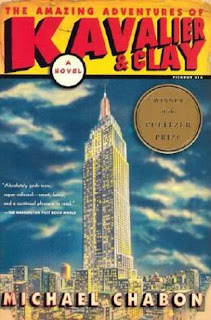 I started thinking about this after finishing The Amazing Adventures of Kavalier & Clay, which is unquestionably this year's Cloud Atlas, albeit without a movie or a soundtrack to buoy the obsession along. This is a book I put off reading for years, because I had heard it was sad, and because I was at a low ebb in my interest in reading "immigrant stories" and blah blah blah.
I'm glad I waited. Waiting meant that I didn't read this book as a high school student, when I probably would have focused exclusively on Sammy's story, or as a college student, when I would have felt the need to keep a running tally of every cameo by a historical figure. Instead, here I am, in this new phase of my reading life, feeling as if I too could scale the Empire State Building or brave Antarctica, just because these characters did and because in them, in pockets, I could see a little of myself and I would most like to be.
This isn't an entirely new concept. When I moved to Chicago I brought books featuring Dido Twite, Mary Ann Singleton, and George Smiley, thinking these were the characters who would stand me in good stead in my new life. I was right, even though I didn't crack the spine and re-read any of these books until I had already been here for two years and the roughest days were behind me. There were actually days when I asked myself what they would do. Dido walked me through rough neighborhoods. Mary Ann got me out of the house on weeknights. George kept me questioning the status quo.
More frequently, I asked myself what my father would do. But most of the time that was in reference to getting the best parking spot.
Maybe they are role models. No one has ever thought they'd like to replicate every single trait someone else possesses, right?
 I started thinking about this after finishing The Amazing Adventures of Kavalier & Clay, which is unquestionably this year's Cloud Atlas, albeit without a movie or a soundtrack to buoy the obsession along. This is a book I put off reading for years, because I had heard it was sad, and because I was at a low ebb in my interest in reading "immigrant stories" and blah blah blah.
I'm glad I waited. Waiting meant that I didn't read this book as a high school student, when I probably would have focused exclusively on Sammy's story, or as a college student, when I would have felt the need to keep a running tally of every cameo by a historical figure. Instead, here I am, in this new phase of my reading life, feeling as if I too could scale the Empire State Building or brave Antarctica, just because these characters did and because in them, in pockets, I could see a little of myself and I would most like to be.
This isn't an entirely new concept. When I moved to Chicago I brought books featuring Dido Twite, Mary Ann Singleton, and George Smiley, thinking these were the characters who would stand me in good stead in my new life. I was right, even though I didn't crack the spine and re-read any of these books until I had already been here for two years and the roughest days were behind me. There were actually days when I asked myself what they would do. Dido walked me through rough neighborhoods. Mary Ann got me out of the house on weeknights. George kept me questioning the status quo.
More frequently, I asked myself what my father would do. But most of the time that was in reference to getting the best parking spot.
Wednesday, August 21, 2013
1178th Most Happy
I'm back!
In general, as is the case today, it's a good sign when I don't blog for weeks on end. It means I'm writing something else. Fortunately, it doesn't follow that because I'm back I'm no longer writing that other thing. On the contrary.
I was starting to feel guilty, though, neglecting My Kind of Fool for so long. And, of course, I had this to share with you:


In general, as is the case today, it's a good sign when I don't blog for weeks on end. It means I'm writing something else. Fortunately, it doesn't follow that because I'm back I'm no longer writing that other thing. On the contrary.
I was starting to feel guilty, though, neglecting My Kind of Fool for so long. And, of course, I had this to share with you:
Has anything more accurate ever been written? How did they know I was 66-100 years old?!
In other news, I love my new apartment. I can sleep. I can no longer identify every pair of shoes my neighbors own. I felt so grown up and footloose that I bought a TV. Sure, the internet is not as reliable as it once was, but I can live with that. It gives me more time to read and, more importantly, write.
Saturday, July 6, 2013
Moving
Mom came to visit me over the Mother's Day weekend, and it was a great visit, one of the best of all time. (I would even go as far as to say it surpassed Dad Visits and We Go to a Wedding, Part One and tied Subcontinent and Sir U von L Honorary St. Patty's Day and Architecture Boat Tour Extravaganza.) But it was a long time ago now and I've had a couple more visitors since then. Next weekend, I'll have my last visitor to this apartment. Appropriately, it's going to be CC, college roommate extraordinaire.
Last visitor to this apartment, you say? Why yes. On August 1st, I'm moving on to bigger and better things in the form of a one bedroom a stone's throw from here. In one of the best coincidences so far, it will be on the same street as where my aunt lived when she first lived in Chicago, two blocks down.
This is the seventh summer in a row that I've moved. The first five times (moving to college, and then moving back and forth between home and new dorm rooms) were carried out under my own steam and I got so good at it that by the end I was turning down help and packing up my car with scientific precision as my parents (absent for the three previous departures) looking on, impressed, and held my diploma.
Last summer, I wasn't moving myself, and it was the trickiest move of all. In 108 degree heat, I helped my parents move into their new house in Lawrence, Kansas. It was the hardest move, but it was also the best, because the payoff was the greatest. When we hung the corn painting above their fireplace and it instantly fit, I could tell they'd found a great new home.
So last summer I didn't actually move myself. There was no way I was moving apartments in the same month as I was helping my parents move houses. Nonetheless, I was getting sicker and sicker of living in a studio (especially with visitors, no matter how beloved, and especially in winter).
The move this summer is going to be hectic. (It falls at the end of our yearly trip to Colorado.) It's going to be hot. (See: August 1st. Also it's a third floor walk-up.) But, it's going to be worth it.
Last visitor to this apartment, you say? Why yes. On August 1st, I'm moving on to bigger and better things in the form of a one bedroom a stone's throw from here. In one of the best coincidences so far, it will be on the same street as where my aunt lived when she first lived in Chicago, two blocks down.
This is the seventh summer in a row that I've moved. The first five times (moving to college, and then moving back and forth between home and new dorm rooms) were carried out under my own steam and I got so good at it that by the end I was turning down help and packing up my car with scientific precision as my parents (absent for the three previous departures) looking on, impressed, and held my diploma.
Last summer, I wasn't moving myself, and it was the trickiest move of all. In 108 degree heat, I helped my parents move into their new house in Lawrence, Kansas. It was the hardest move, but it was also the best, because the payoff was the greatest. When we hung the corn painting above their fireplace and it instantly fit, I could tell they'd found a great new home.
So last summer I didn't actually move myself. There was no way I was moving apartments in the same month as I was helping my parents move houses. Nonetheless, I was getting sicker and sicker of living in a studio (especially with visitors, no matter how beloved, and especially in winter).
The move this summer is going to be hectic. (It falls at the end of our yearly trip to Colorado.) It's going to be hot. (See: August 1st. Also it's a third floor walk-up.) But, it's going to be worth it.
Sunday, May 5, 2013
"Of course it's all trash..."
Sometimes my friends have more faith in me than I have in myself. Several times since he moved to Chicago, R has introduced me to friends of his as a writer. As "one hell of a writer." As "an amazing playwright." Just as frequently, K has reminded me of stories I wrote in creative writing in high school, quoting them word for word. (I had to dredge up the document to fact-check her and, sure enough, she was right.)
This morning, I was reading Christopher and His Kind by Christopher Isherwood (I finished it this afternoon, under a flowering tree), and came across the following excerpt of a letter from his friend Edward Upward:
Those of us who have friends like R and K, and Edward Upward, are the lucky ones. These are the friends who don't believe our nonsense when we say we're headed in a different direction. They insist on continuing to see us as our best selves. It's not that they're inflexible in their conception of our identity, rather they see through all our bluster to the core of what makes us us.
During the Summer of Angst and the following years, I asked myself, "If I'm not a writer, and I've spent my entire life since fifth grade thinking of myself as a writer, then who am I?" I never did come up with a satisfactory answer. Thank goodness. And thank goodness I'm surrounded by people who love me and know better.
This morning, I was reading Christopher and His Kind by Christopher Isherwood (I finished it this afternoon, under a flowering tree), and came across the following excerpt of a letter from his friend Edward Upward:
Olive showed me your letter in which you said something about being silently judged. Of course it's all trash, because--though Marx may not have said it--each of us helps the revolution best by using his own weapons. And your best weapon is obviously writing. It's my misfortune that I have to fight as a fifth-rate teacher.
Those of us who have friends like R and K, and Edward Upward, are the lucky ones. These are the friends who don't believe our nonsense when we say we're headed in a different direction. They insist on continuing to see us as our best selves. It's not that they're inflexible in their conception of our identity, rather they see through all our bluster to the core of what makes us us.
During the Summer of Angst and the following years, I asked myself, "If I'm not a writer, and I've spent my entire life since fifth grade thinking of myself as a writer, then who am I?" I never did come up with a satisfactory answer. Thank goodness. And thank goodness I'm surrounded by people who love me and know better.
Saturday, April 6, 2013
Why Roger Ebert Was My Hero (and other facts)
I've been filling out the Proust Questionnaire pretty much yearly since early in my college career. I never consult previous years' responses while I fill it out, although I do compare answers afterward. Each year, for the years that I've done it, I've listed Roger Ebert as one of my heroes.
"The story can either be told in a few sentences, or not told at all."
Because he was kind.
I never met the guy, despite having lived in one of his
towns for all but 4 ½ years of my life. I never made it to Ebertfest. (Where was I last year and why didn’t I go?) However, I believe
that an unkind man would be unable to capture the tone Ebert did from time to
time in his reviews and blog entries. He was a secular humanist. He had
wide-ranging sympathies. He had made his mistakes and learned from them. He
appeared not to have any regrets.
“Both Curtis and Lemmon are practicing cruel
deceptions--Curtis has Monroe thinking she's met a millionaire, and Brown
thinks Lemmon is a woman--but the film dances free before anyone gets hurt.
Both Monroe and Brown learn the truth and don't care, and after Lemmon reveals
he's a man, Brown delivers the best curtain line in the movies. If you've seen
the movie, you know what it is, and if you haven't, you deserve to hear it for
the first time from him.”
Because he was from Urbana and he wasn’t afraid to love
it.
Everyone in Chicago, from the Tribune (ha!) to the Sun-Times and all the rest, ran to present Ebert as the
ultimate post-Studs Terkel Chicagoan. That may be true, but he did
Champaign-Urbana proud too. He was intelligent, unpretentious, down to earth,
self-deprecating, and funny. Again and again in his writing (even in his
reviewing), he held up moments from his childhood in Urbana as significant. He
didn’t write it off as “downstate,” reduce it to a college town, or fixate on
the corn and soybeans. He lived in Chicago and, yes, he was a Chicagoan, but
Champaign-Urbana got the film festival, because where else would it be? Home is
home.
"On the news last week, there was the story of a child
killed by stray gunfire. He was in the middle of a basketball game in a city
park. One of his teammates told the camera: "It's a shame he never had the
experience of life." There are fuzzy shots of a surveillance camera
showing a white car with a sunroof speeding from the site. Inside were probably
young men empowered by firearms and an automobile to shoot stupidly into a park
and make a pathetic gang gesture. The Interrupters were once such young men —
and women. They once were blind, but now they see. […] When I was a child, I
rode my bike home from school down a daily network of neighborhood streets. On
one street, some kids were sitting on a porch. They pulled me off my bike,
punched me and told me it was "their" street. They were white like
me. They had no idea what school I went to. By protecting "their"
street, they were gaining esteem. I have no doubt they felt good afterward."
Because he was serene in the face of illness.
What could have been the end of his career marked a new
period of intense prolificacy and, I think, beautiful writing. He grappled with
big questions with humor and perspective. He got frustrated. He was human. He
made accommodations. He kept doing his job.
“The reason that O'Brian's readers are so faithful (I am
one) is because this friendship provides him with a way to voice and consider
the unnatural life of a man at sea: By talking with each other, the two men
talk to us about the contest between man's need to dominate, and his desire to
reflect.”
Because he could write.
This is the kind of writer I want to be: insightful,
approachable, populist. He was a smart man, and it showed. He was funny.
“As a director he has never been willing to settle for
plot; he is much more interested in character and situation, and likes to
assemble unusual people in peculiar situations and stir the pot.”
Because he had great taste in movies.
And I don’t just mean fine taste. I mean he liked what he
liked unapologetically, and 90% of the time I agreed with him. He was just as
likely to give an art-house film four stars as a blockbuster. He cared about
things like acting, direction, script, and cinematography, and whether it came
with millions of dollars of visual effects or whether it was subtitled or
whether it was for children didn’t matter. He disliked a lot of movies, but he
only hated the ones that really deserved it.
“By the end of the movie, you find yourself reacting to
the weddings, and the funeral, almost as you do at real events involving people
you didn't know very well, but liked, and wanted to know better.”
Wednesday, April 3, 2013
"And to do that, you have to let yourself get hooked."
Beginning in April 2007, I started keeping a list of all the books I'd read the
previous year. You can find links to previous years at the bottom of this entry. Without further ado, welcome to 2012-2013, the Year of David Mitchell (or: 26 Books, 17 Authors).
Books
1) Affinity by Sarah Waters
2) The Inner Voice of Love by Henri J.M. Nouwen
3) Lord John and the Scottish Prisoner by Diana Gabaldon
4) Following Christopher Creed by Carol Plum-Ucci
5) The Game of Kings by Dorothy Dunnett*
6) Queens' Play by Dorothy Dunnett*
7) Quiet: The Power of Introverts in a World That Can't Stop Talking by Susan Cain
8) The Disorderly Knights by Dorothy Dunnett*
9) Cloud Atlas by David Mitchell
10) The Thousand Autumns of Jacob de Zoet by David Mitchell
11) Ghostwritten by David Mitchell
12) Black Swan Green by David Mitchell
13) People by Alan Bennett
14) A Wrinkle in Time by Madeleine L'Engle*
15) A Wind in the Door by Madeleine L'Engle*
16) A Swiftly Tilting Planet by Madeleine L'Engle*
17) Many Waters by Madeleine L'Engle*
18) number9dream by David Mitchell
19) Lions and Shadows: An Education in the Twenties by Christopher Isherwood
20) Will Grayson, Will Grayson by John Green and David Levithan
21) Tell the Wolves I'm Home by Carol Rifka Brunt
22) We Have Always Lived in the Castle by Shirley Jackson
23) Running the Books: The Adventures of an Accidental Prison Librarian by Avi Steinberg
24) Gettysburg: The Graphic Novel by C.M. Butzer
25) Down There on a Visit by Christopher Isherwood
26) A Dublin Carol by Conor McPherson
*re-reads
I have continued the trend of reading fewer and fewer books since graduating from college. Although only being able to list 26 books here depresses me, there is cause for hope! So far, I am only 3 books behind my 50-book challenge for 2013, and several of these were read as a direct result of the pressure to keep up with that challenge.
It may well be that I chose my books more carefully this year. It was, after all, a year of author binges and re-reads. Looking over this list now, there are only four I would not re-read, given the chance, and none that inspired the kind of dislike I've felt for books on the list in the past. It was also, my mother would urge me to point out, a good year for female authors.
Top Five of the Year, in descending order
Cloud Atlas by David Mitchell
Down There on a Visit by Christopher Isherwood
The Thousand Autumns of Jacob de Zoet by David Mitchell
Running the Books: The Adventures of an Accidental Prison Librarian by Avi Steinberg
Tell the Wolves I'm Home by Carol Rifka Brunt
Past years
2011-2012
2010-2011
2009-2010
2008-2009
2007-2008
Books
1) Affinity by Sarah Waters
2) The Inner Voice of Love by Henri J.M. Nouwen
3) Lord John and the Scottish Prisoner by Diana Gabaldon
4) Following Christopher Creed by Carol Plum-Ucci
5) The Game of Kings by Dorothy Dunnett*
6) Queens' Play by Dorothy Dunnett*
7) Quiet: The Power of Introverts in a World That Can't Stop Talking by Susan Cain
8) The Disorderly Knights by Dorothy Dunnett*
9) Cloud Atlas by David Mitchell
10) The Thousand Autumns of Jacob de Zoet by David Mitchell
11) Ghostwritten by David Mitchell
12) Black Swan Green by David Mitchell
13) People by Alan Bennett
14) A Wrinkle in Time by Madeleine L'Engle*
15) A Wind in the Door by Madeleine L'Engle*
16) A Swiftly Tilting Planet by Madeleine L'Engle*
17) Many Waters by Madeleine L'Engle*
18) number9dream by David Mitchell
19) Lions and Shadows: An Education in the Twenties by Christopher Isherwood
20) Will Grayson, Will Grayson by John Green and David Levithan
21) Tell the Wolves I'm Home by Carol Rifka Brunt
22) We Have Always Lived in the Castle by Shirley Jackson
23) Running the Books: The Adventures of an Accidental Prison Librarian by Avi Steinberg
24) Gettysburg: The Graphic Novel by C.M. Butzer
25) Down There on a Visit by Christopher Isherwood
26) A Dublin Carol by Conor McPherson
*re-reads
I have continued the trend of reading fewer and fewer books since graduating from college. Although only being able to list 26 books here depresses me, there is cause for hope! So far, I am only 3 books behind my 50-book challenge for 2013, and several of these were read as a direct result of the pressure to keep up with that challenge.
It may well be that I chose my books more carefully this year. It was, after all, a year of author binges and re-reads. Looking over this list now, there are only four I would not re-read, given the chance, and none that inspired the kind of dislike I've felt for books on the list in the past. It was also, my mother would urge me to point out, a good year for female authors.
Top Five of the Year, in descending order
Cloud Atlas by David Mitchell
Down There on a Visit by Christopher Isherwood
The Thousand Autumns of Jacob de Zoet by David Mitchell
Running the Books: The Adventures of an Accidental Prison Librarian by Avi Steinberg
Tell the Wolves I'm Home by Carol Rifka Brunt
Past years
2011-2012
2010-2011
2009-2010
2008-2009
2007-2008
Thursday, February 28, 2013
A Purpose Overhaul
Ultimately, I needed to be told. That's what I learned about myself two weeks ago today while sitting opposite my dad in Duke of Perth. He told me that if I wanted to go to grad school I should go to grad school, in whatever field I wanted, impractical or not, and that if I came out the other end without prospects, the second round would be on me. I almost started crying all over my egg-topped burger, because this was exactly what I'd needed to hear.
And it made me realize: I've been spending my time in Chicago trying to partially undo the last twelve years of my life. How stupid could I be? Some of the things I was trying to shut down were the things I liked most about myself: Curiosity for curiosity's sake. Love of travel. Belief in the humanities and their relevance. A strong belief in the power of books.
Empathy, I was keeping, obviously. Ditto observation skills, a sense of humor, and a fondness for other people's stories. The writing, at least, was coming back (thanks to an intensely absorbing Letter Game with K). For the rest, it's as if those well-loved and expertly deployed self-analysis skills I've been gradually developing were worthless. I really couldn't believe I'd allowed myself to fool myself so thoroughly into believing this was the way I should be.
It's not that the past two (four, if I'm honest) years get to just vanish and I get to go back to my English PhD plans. Those, I think, are gone for good. It's that I am no longer actively (if unwittingly) engaged in self-sabotage, and that feels good.
And this whole business has taught me something else, too. I may feel independent, and I may have always felt that way, in this realm. I may have struggled in my early college days to reconcile my roommates' need to appease their parents with my (limited, culturally biased) view of adulthood and how adults make choices. I may have a strong sense of self. All of that may be true; I will still need approval.
So let it be known: the summer of 2014 will be the summer before grad school. I've written it down now, so here we go.
And it made me realize: I've been spending my time in Chicago trying to partially undo the last twelve years of my life. How stupid could I be? Some of the things I was trying to shut down were the things I liked most about myself: Curiosity for curiosity's sake. Love of travel. Belief in the humanities and their relevance. A strong belief in the power of books.
Empathy, I was keeping, obviously. Ditto observation skills, a sense of humor, and a fondness for other people's stories. The writing, at least, was coming back (thanks to an intensely absorbing Letter Game with K). For the rest, it's as if those well-loved and expertly deployed self-analysis skills I've been gradually developing were worthless. I really couldn't believe I'd allowed myself to fool myself so thoroughly into believing this was the way I should be.
It's not that the past two (four, if I'm honest) years get to just vanish and I get to go back to my English PhD plans. Those, I think, are gone for good. It's that I am no longer actively (if unwittingly) engaged in self-sabotage, and that feels good.
And this whole business has taught me something else, too. I may feel independent, and I may have always felt that way, in this realm. I may have struggled in my early college days to reconcile my roommates' need to appease their parents with my (limited, culturally biased) view of adulthood and how adults make choices. I may have a strong sense of self. All of that may be true; I will still need approval.
So let it be known: the summer of 2014 will be the summer before grad school. I've written it down now, so here we go.
Sunday, January 27, 2013
Fifteen Miles Down Memory Lane
It's that time of year again: that time when I get in touch with complete strangers and arrange meetings with them in coffee shops. Once there, we ask each other surface questions and try to get to know one another very quickly.
No, it's not my once-yearly dating experience, it's time to interview prospective Princeton students!
This is one of my favorite volunteer activities, and this year I took full advantage of it by offering to drive and meet each of my interviewees on their own turf. I've lived in Chicago for a year and a half now, and although I'm familiar with more neighborhoods than anyone could have predicted, whole swaths of the city remain a mystery to me. So, over the Martin Luther King Day weekend, I made two trips to the southern suburbs.
The interviews themselves were great experiences--experiences I can't talk about here--and my inaugural visits to Orland Park and Matteson went off without a hitch. There was only one moment that brought me up short, and that was the 15-odd miles I spent on I-57.
It wouldn't surprise many people that the toughest breakup of my life thus far has been with a place. Not least of all because I've talked about it here before. (I even have my own listen-to-Adele-and-cry song dedicated to the experience, which is something all good breakups need.) For the most part, moved on from the loss of my childhood home pretty quickly. I don't feel untethered, or unsafe, as I did initially. Nor do I miss the ability to be on my parents' doorstep in 2.5 hours. (That is to say, I do miss that, but it's not an active source of woe.)
So, for the most part, I'm over it. Just like I'm over my high school crushes and that time smacked a pile of coats during a game of hide and seek and my best friend emerged near tears. That doesn't mean I don't get a twinge now and then, and I definitely got a twinge southbound on I-57.
I went back to work on Tuesday, the feeling largely forgotten. However, perhaps as a result of that brief Monday-morning moment, I found my mind wandering to my hometown. How I have a dentist appointment scheduled there in March, so I'll have to go back. How one of my high school friends just moved back there. How my hometown had been, for some time, pretty much ignored by Google Street View.
On a whim, I typed my old address into Google Maps, and was immediately forced to contain my shout of glee (still at work, remember). My old neighborhood was on Google Street View, and what was that parked in front of our old house?

That's right. Our car. Some time before my parents moved--that late spring/early summer, in fact, because the for sale sign is up and the house has sold--the photography van drove by and did me an immeasurable favor.
I may love their new town, their new house, and my mom's new job. I may no longer yearn for visits to Champaign (although I may never stop yearning for that warm light in the living room). I may be at peace with this new chapter of my life, but that doesn't mean I'm not thrilled--moved to tears, ecstatic--that, in a tiny corner of the internet, my parents are still living in my childhood home.
No, it's not my once-yearly dating experience, it's time to interview prospective Princeton students!
This is one of my favorite volunteer activities, and this year I took full advantage of it by offering to drive and meet each of my interviewees on their own turf. I've lived in Chicago for a year and a half now, and although I'm familiar with more neighborhoods than anyone could have predicted, whole swaths of the city remain a mystery to me. So, over the Martin Luther King Day weekend, I made two trips to the southern suburbs.
The interviews themselves were great experiences--experiences I can't talk about here--and my inaugural visits to Orland Park and Matteson went off without a hitch. There was only one moment that brought me up short, and that was the 15-odd miles I spent on I-57.
It wouldn't surprise many people that the toughest breakup of my life thus far has been with a place. Not least of all because I've talked about it here before. (I even have my own listen-to-Adele-and-cry song dedicated to the experience, which is something all good breakups need.) For the most part, moved on from the loss of my childhood home pretty quickly. I don't feel untethered, or unsafe, as I did initially. Nor do I miss the ability to be on my parents' doorstep in 2.5 hours. (That is to say, I do miss that, but it's not an active source of woe.)
So, for the most part, I'm over it. Just like I'm over my high school crushes and that time smacked a pile of coats during a game of hide and seek and my best friend emerged near tears. That doesn't mean I don't get a twinge now and then, and I definitely got a twinge southbound on I-57.
I went back to work on Tuesday, the feeling largely forgotten. However, perhaps as a result of that brief Monday-morning moment, I found my mind wandering to my hometown. How I have a dentist appointment scheduled there in March, so I'll have to go back. How one of my high school friends just moved back there. How my hometown had been, for some time, pretty much ignored by Google Street View.
On a whim, I typed my old address into Google Maps, and was immediately forced to contain my shout of glee (still at work, remember). My old neighborhood was on Google Street View, and what was that parked in front of our old house?
That's right. Our car. Some time before my parents moved--that late spring/early summer, in fact, because the for sale sign is up and the house has sold--the photography van drove by and did me an immeasurable favor.
I may love their new town, their new house, and my mom's new job. I may no longer yearn for visits to Champaign (although I may never stop yearning for that warm light in the living room). I may be at peace with this new chapter of my life, but that doesn't mean I'm not thrilled--moved to tears, ecstatic--that, in a tiny corner of the internet, my parents are still living in my childhood home.
Thursday, January 3, 2013
New Year

It's not really news, per se, but it's--nice isn't really the word--good to see it getting national coverage. Do I think this will change anything? I'm not sure, but I doubt it. Do I want to become the next David Simon? Not really--I don't think I have the constitution for prolonged bouts of anger--but when I see stuff like this (not news to me, but presented like this, off the pages of the middlebrow Chicago Tribune, in a new context) I feel that outraged, liberal, Ivy League, white person frustration coming on, and that's difficult enough to parse on its own. Usually it just turns into sadness, which is far less productive, albeit certainly less hypocritical.
There are times when I feel ashamed of loving the things I love about Chicago as much as I do, because I know I enjoy them others' expense. (And that feeling, too, is an unwanted luxury.) Once you know something, you can't un-know it. When I hopped in the airport shuttle in Kansas City two days ago, told the driver where I was from, and he said, "Oh, Chicago. That's a great city. Big homicide problem, though," it reminded me of the reactions French people would have when we told them we were from Illinois, "near Chicago." They would inevitably mime a machine gun, and make the machine gun noise. They had gotten their image of Chicago from Al Capone, but were they really that far off base? Certainly not in the nineties, which was when most of those conversations took place. There are fewer homicides now in Chicago than there were then, even with this year's 16% rise, but that is no reason to feel good about ourselves, or the city. To echo President Obama recently, is this really the best we can do?
Kansas City has its own sizable homicide rate, so the guy driving the shuttle would know. To someone from New Orleans or Detroit or Baltimore if we're talking per capita, I probably sound quaint too. But competing for the distinction of Worst National Murder Problem is about as stupid as undergraduates comparing how little sleep they got the night before.
Why am I starting a new year of blogging by talking about this? No particular reason, aside from the fact that it's something I've been thinking about and I don't want it to go unsaid. On a personal level, I don't know whether 2013 will be better or worse than 2012 (odds are it'll be better, although I don't want to tempt fate), but if I learn anywhere near as much this year as I did last year, it'll certainly be a doozy.
Subscribe to:
Posts (Atom)